About Sir Ganga Ram Hospital
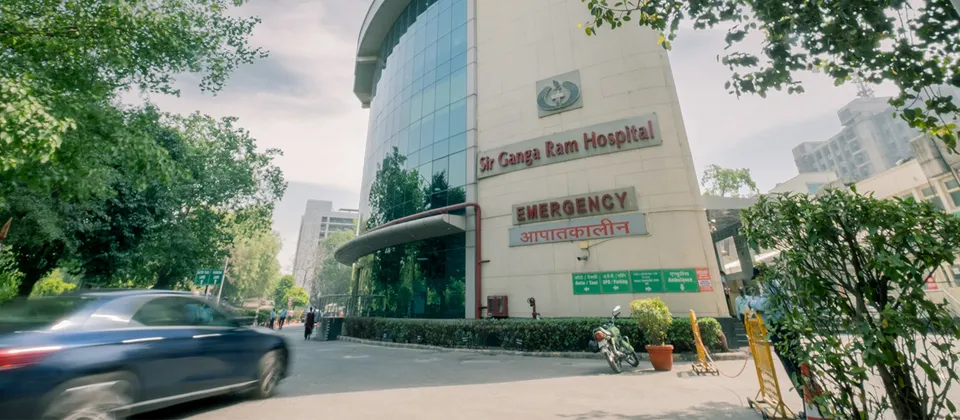
Sir Ganga Ram Hospital is one of Delhi’s oldest and largest private hospitals, a 900-bed institution in Rajinder Nagar spanning orthopaedics, general surgery, internal medicine and cardiology.
History and background
Sir Ganga Ram Hospital in Rajinder Nagar owes its origin to Sir Ganga Ram, a renowned engineer and philanthropist, and has been delivering care since 1954. Over the decades it has recorded several firsts in India: the country's first successful liver transplant in 1989, the first Centre for Chest Surgery in 1991, the first Bloodless Medicine and Surgery Centre in 2001, and North India's first comprehensive robotic surgery centre in 2012. The hospital notes that 21 Padma award winners have come from its hospitals.
Specialities and centres of excellence
Key departments include cardiology and the Dharma Vira Heart Centre, oncology, gastroenterology, orthopaedics, neurology and obstetrics, alongside genetic medicine, minimal access and bariatric surgery, surgical gastroenterology, sleep medicine, endocrinology and metabolism, nuclear medicine, a day-care centre, homoeopathy, Ayurveda, liver transplantation, cochlear implants and physiotherapy. The hospital operates one of the country's most prolific liver transplant programmes, and more than 70% of liver transplants in the country are done by surgeons who are alumni of this department.
Technology and facilities
The hospital has around 675 beds, including ICU and private wards, and is accredited by NABH and NABL with ISO-certified quality systems. Its nephrology department began in 1981, the first kidney transplant was performed in 1987, and almost 6,000 kidneys have been transplanted since, with about 250 transplants each year.
International patients
Sir Ganga Ram Hospital is nationally recognised for its kidney and liver transplant programme, with outcomes comparable to international standards through a multidisciplinary team. It is located on Pusa Road in Rajinder Nagar, close to Rajendra Place and Karol Bagh.
How AlisPro MediTours supports your treatment
AlisPro MediTours is a medical travel coordination service, not a hospital. We do not provide medical treatment, and clinical decisions always rest with your treating doctors. What we do is make the journey to this hospital easier to plan and less stressful to manage.
After you send your medical reports through our enquiry form, our coordinators share them with the hospital's international patient team and help you obtain a written opinion and an estimated cost. If you decide to go ahead, we can help with the medical visa invitation letter, flight planning, airport pickup, accommodation near the hospital, local transport, interpreter support and appointment scheduling. During your stay we stay in touch with you and your family, and after you return home we help arrange follow-up consultations and access to your records.
Costs, package inclusions and waiting times vary by hospital, doctor and treatment, so we recommend asking for a written estimate that clearly states what is and is not included.
Before you travel
Preparation makes a big difference to how smoothly a medical trip goes. Gather your recent medical reports, imaging (with the discs or digital files), a list of current medicines and any previous operation summaries, and share them early so the hospital can give a realistic opinion before you travel.
Ask the hospital or your coordinator for the expected length of stay, the likely total cost and what it includes, whether a family member may accompany you, and what follow-up will be needed after you return home. Confirm the treating doctor's name, the accreditation of the department you will use and how emergencies are handled.
Most international patients enter India on a medical visa, which normally requires an invitation letter from the hospital. Check the validity of your passport, arrange travel insurance that covers medical travel where possible, and plan for extra days in case treatment or recovery takes longer than expected. Keep copies of all documents on your phone and in your luggage.
Travel guide: Delhi
Delhi is served by Indira Gandhi International Airport, and hospitals in the capital are usually 30 to 60 minutes from the airport depending on traffic and time of day. The Delhi Metro reaches most neighbourhoods and is a fast way to travel around the city, while taxis and ride-hailing apps are widely available. Visitors staying for treatment often choose hotels or serviced apartments near the hospital in areas such as South Delhi, Saket, Vasant Kunj or Central Delhi. The weather is hottest from April to June, rainy in July to September, and most comfortable from October to March. Hindi and English are widely spoken.
Specialties & Departments
- Orthopaedics
- General Surgery
- Internal Medicine
- Cardiology